Longevity · Cold Therapy · Breathwork · Mind-Body Science
Fire and Ice: Why Combining Breathwork with Cold Exposure Is the Most Powerful Longevity Practice You’re Not Doing
You do it roughly 22,000 times a day, almost entirely without thinking. You have done it since the first seconds of your life and will do it until the last. Breathing is so relentlessly automatic that most of us never give it a second thought. But a quiet revolution in longevity science suggests that how we breathe — the pace, the depth, the deliberate pauses — may be one of the most powerful levers we have over our own health and lifespan.
This is not the province of wellness influencers alone. Over the past decade, a wave of peer-reviewed studies has examined what happens to the human body when we take conscious control of something we normally leave to autopilot. The results are, to put it plainly, remarkable — touching inflammation, immune function, cardiovascular health, stress hormones, and even the molecular clocks inside our cells that govern how fast we age.
The Man Who Made Scientists Pay Attention
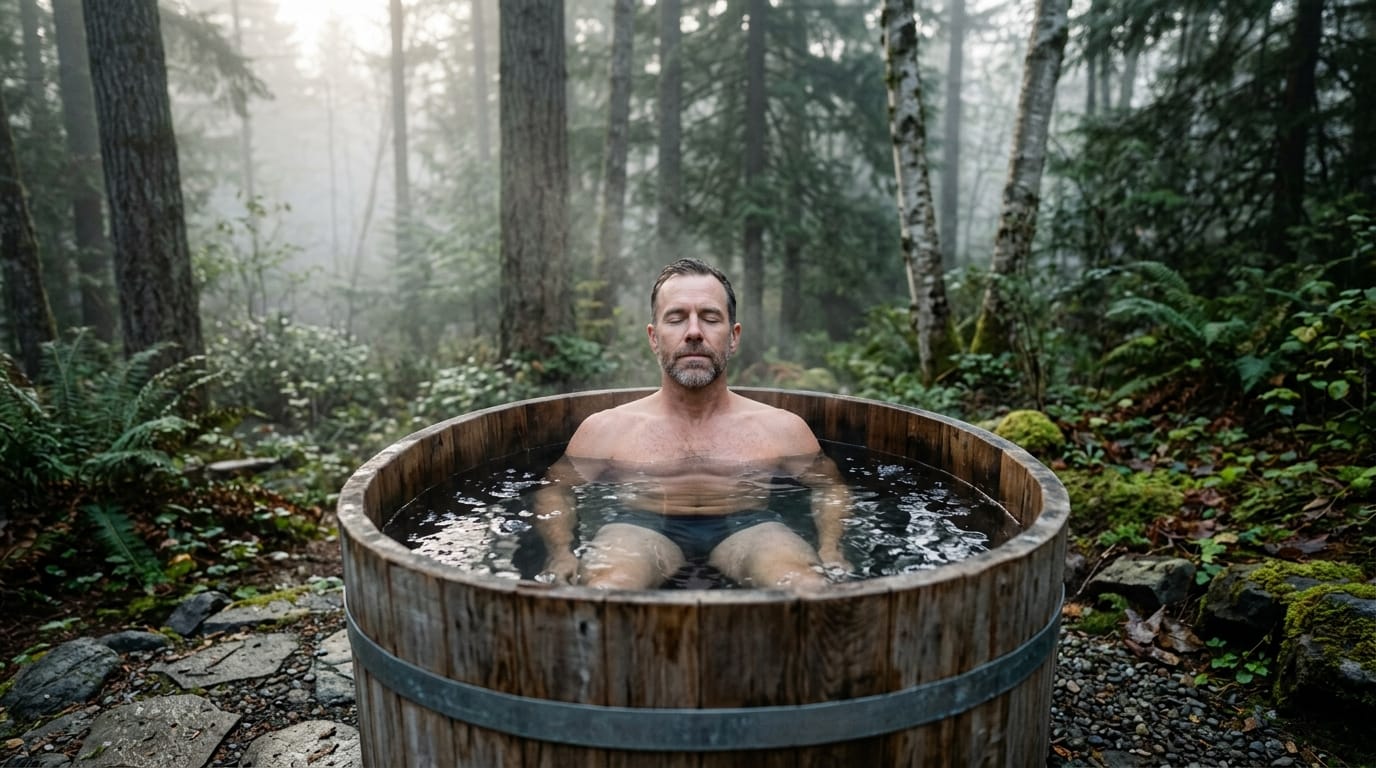
No single figure has done more to push breathwork into the laboratory than Wim Hof, the Dutch endurance athlete and motivational teacher known as "The Iceman." His method combines cycles of deep, rapid breathing with cold exposure and meditation — a deliberately simple package that he has submitted, repeatedly, to scientific scrutiny.
The landmark moment came in 2014, when researchers at Radboud University in the Netherlands published the results of a study in which participants trained in the Wim Hof Method were injected with bacterial endotoxin — a substance that, in ordinary circumstances, reliably causes fever, headache, and a dramatic spike in inflammatory markers. The trained subjects produced far less pro-inflammatory cytokines than the control group and reported significantly fewer symptoms. For the first time, a peer-reviewed paper demonstrated that the human immune system could be voluntarily influenced from the outside.
Ten years on, the evidence has only deepened. A 2024 systematic review published in PLOS ONE by Almahayni and Hammond — drawing on all peer-reviewed trials conducted between 2014 and 2022 — concluded that the Wim Hof Method appears to reduce inflammation by elevating epinephrine, which in turn increases the anti-inflammatory cytokine interleukin-10 while suppressing pro-inflammatory ones. Put simply: the breathing practice rewires the body's chemical messaging system, tipping the balance away from damaging inflammation.
"The findings suggest that the Wim Hof Method may reduce inflammation in healthy and non-healthy participants as it increases epinephrine levels, causing an increase in interleukin-10 and a decrease in pro-inflammatory cytokines."
— Almahayni & Hammond, PLOS ONE, 2024Inflammation is not a minor housekeeping concern. Chronic low-grade inflammation — sometimes called "inflammaging" by researchers — is now understood to be a central driver of nearly every major age-related disease, from cardiovascular disease and type 2 diabetes to Alzheimer's and cancer. If a breathing practice can measurably reduce it, the longevity implications are hard to overstate.
The Vagus Nerve: Your Body's Longevity Highway
To understand why conscious breathing has such wide-ranging effects, you need to know about the vagus nerve — the longest cranial nerve in the body, running from the brainstem down through the heart, lungs, and gut. It is the primary channel of the parasympathetic nervous system, which governs the body's "rest-and-digest" state. When you exhale slowly and deeply, you physically stimulate the vagus nerve, triggering a cascade of effects that researchers are only beginning to fully map.
Heart rate variability, or HRV — the subtle variation in the intervals between heartbeats — is now widely used as a proxy for cardiovascular resilience and overall health. Higher HRV is consistently associated with lower mortality risk. Slow, controlled breathing is one of the most reliably effective methods of increasing it.
The Ancient Techniques That Science Is Now Validating
Wim Hof Method
30–40 deep power breaths, followed by a breath retention, then a recovery breath. Typically paired with cold exposure. The most studied method for immune modulation.
Box Breathing (4-4-4-4)
Inhale 4 sec → hold 4 sec → exhale 4 sec → hold 4 sec. Used by US Navy SEALs. Strong evidence for cortisol reduction and HRV improvement.
4-7-8 Breathing
Inhale 4 sec → hold 7 sec → exhale 8 sec. The extended exhale powerfully activates parasympathetic tone. Consistently improves anxiety and sleep quality.
Resonant Breathing
5–6 breaths per minute without a pause. Synchronises the autonomic nervous system with the heart's rhythms. Associated with the largest HRV gains.
Breathing and the Clocks Inside Your Cells
Perhaps the most intriguing frontier in breathwork research concerns telomeres — the protective caps on the ends of chromosomes that shorten a little every time a cell divides. Telomere length is one of the most closely studied biomarkers of biological aging. When telomeres become critically short, cells stop functioning properly and die.
The mechanism proposed by researchers involves the reduction of chronic oxidative stress — one of the main forces that chips away at telomere length. Breathwork reduces cortisol, which in turn reduces oxidative stress. Lower oxidative stress means slower telomere erosion. Slower telomere erosion means more years of healthy cellular function.
What About the Psychological Benefits?
Longevity research has increasingly moved beyond the purely physical. We know from decades of data that chronic psychological stress, depression, and social isolation are as dangerous to lifespan as smoking or obesity. Any intervention that reliably reduces stress and improves mental wellbeing belongs in the longevity toolkit.
The Caveats: What Science Still Does Not Know
Good journalism demands honesty about limits, and the breathwork literature has them. Many studies involve small sample sizes. Few have followed participants for more than weeks or months; the long-term effects remain largely uncharted. It is also genuinely difficult to separate the contribution of breathing alone from the meditation or cold-exposure components.
Some techniques also carry risks. Hyperventilation-based methods like the Wim Hof breathing cycle should never be practised in water, while driving, or in any situation where loss of consciousness could be dangerous. People with cardiovascular conditions, epilepsy, or respiratory disease should consult a physician before beginning any structured breathwork programme.
The Practitioner's Bottom Line
If you strip away the mythology, the ice baths, and the Instagram aesthetics, what remains is a core finding that is both ancient and newly verified: breathing slowly and deliberately, in a structured pattern, reliably moves the body toward a state of reduced stress, lower inflammation, better cardiovascular regulation, and — tentatively but compellingly — slower biological aging.
The barrier to entry is almost comically low. You already have the equipment. Five to ten minutes a day, the research suggests, is enough to see measurable changes in cortisol and HRV. In a medical landscape crowded with expensive supplements and interventions, the emerging science of breathwork stands out for a different reason entirely. It is free. It is available everywhere. And it works — carefully, measurably, breath by deliberate breath.
Sources & References
- [1] Kox M., van Eijk L.T., et al. (2014). "Voluntary activation of the sympathetic nervous system and attenuation of the innate immune response in humans." Proceedings of the National Academy of Sciences, 111(20), 7379–7384. https://doi.org/10.1073/pnas.1322174111 PNAS 2014 ↗
- [2] Almahayni O. & Hammond L. (2024). "Does the Wim Hof Method have a beneficial impact on physiological and psychological outcomes in healthy and non-healthy participants? A systematic review." PLOS ONE, 19(3), e0286933. https://doi.org/10.1371/journal.pone.0286933 PLOS ONE 2024 ↗
- [3] Maniaci A., et al. (2024). "Neurobiological and anti-inflammatory effects of a deep diaphragmatic breathing technique based on neofunctional psychotherapy: A pilot RCT." Stress and Health. https://doi.org/10.1002/smi.3503 Stress and Health 2024 ↗
- [4] Fincham G.W., Strauss C., Montero-Marin J., Cavanagh K. (2023). "Effect of breathwork on stress and mental health: A meta-analysis of randomised-controlled trials." Scientific Reports, 13, 432. Twelve RCTs; N=785 for the primary stress outcome. Scientific Reports 2023 ↗
- [4b] "Exploring 4-7-8 Breathing for Stress Relief and Improved Quality of Life in Chronic and Degenerative Diseases: A Scoping Review." ICISTECH Proceedings, 2025. PRISMA-ScR; 15 studies, 2013–2024. icistech.org ↗
- [5] Giridharan S. (2024). "Yoga and Telomeres: A Path to Cellular Longevity?" Cureus. https://doi.org/10.7759/cureus.74552 Cureus 16(11): e74552 ↗
- [6] Chaix R., et al. (2020). "Telomere length correlates with subtelomeric DNA methylation in long-term mindfulness practitioners." Scientific Reports, 10, 4516. https://doi.org/10.1038/s41598-020-61241-6 Scientific Reports 2020 ↗
- [7] Ketelhut S., et al. (2023). "The effectiveness of the Wim Hof Method on cardiac autonomic function, blood pressure, arterial compliance, and different psychological parameters." Scientific Reports, 13, 17517. https://doi.org/10.1038/s41598-023-44902-0 Scientific Reports 2023 ↗
Ted Blackwolf
Ted Blackwolf is a health and longevity journalist with over a decade of experience covering the science of human performance and aging. He has reported from research institutions across Europe and North America. He is not a medical professional; nothing in this article constitutes medical advice.