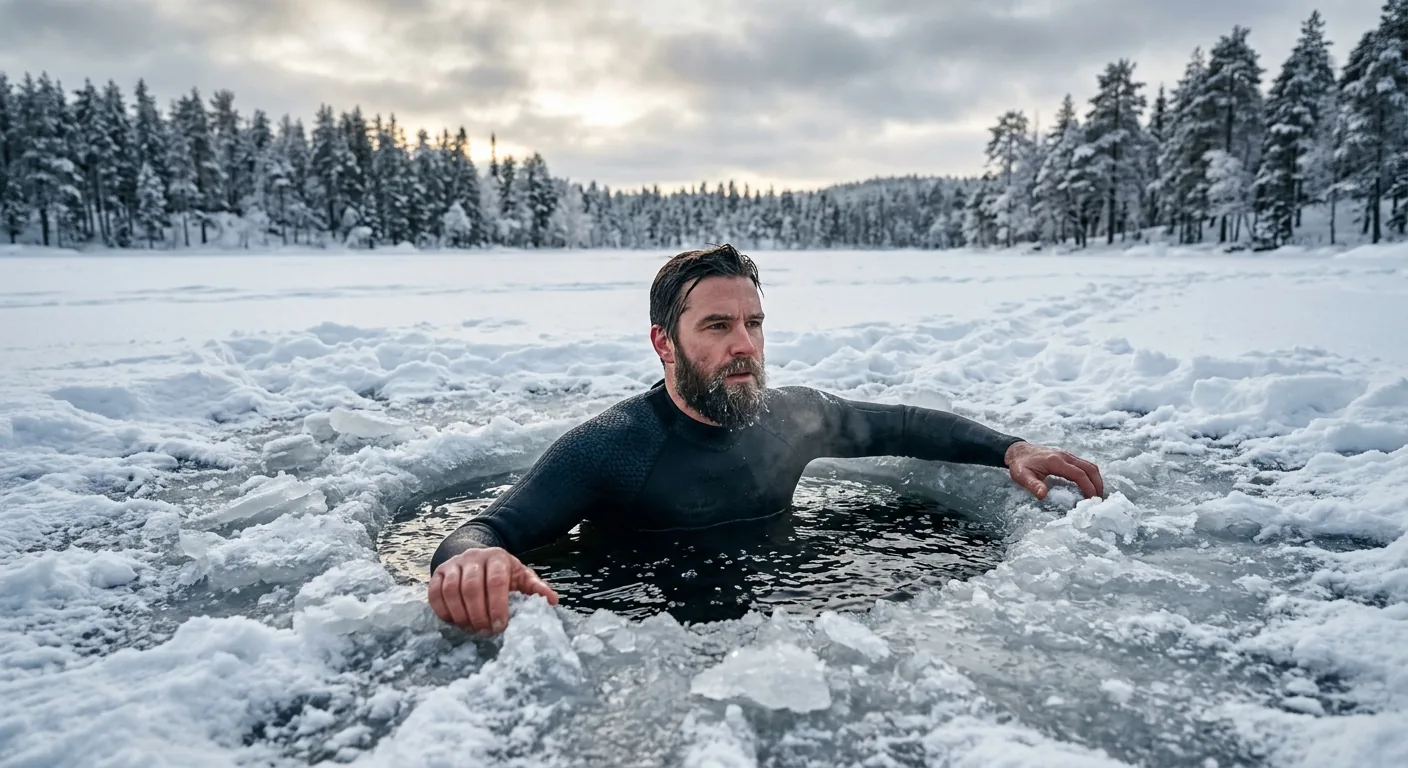
Longevity · Cold Therapy · Immune Health · Neuroscience
Into the Cold: The Standalone Science of Ice Baths, Cold Plunges, and Cold Showers
In November 2022, Amazon sold fewer than 1,000 ice bath tubs. Twelve months later, that number had risen to over 90,000 units. The cold plunge has gone, in the space of a single year, from niche biohacking practice to mass-market phenomenon — driven by a combination of social media virality, high-profile endorsements, and a growing instinct among health-conscious people that there is something genuine underneath the hype. They are not wrong.
The science of cold-water immersion (CWI) — encompassing everything from full ice baths and outdoor winter swimming to daily cold showers — has matured considerably in the past decade. A landmark systematic review and meta-analysis published in PLOS ONE in January 2025, synthesising data from 11 randomised controlled trials involving 3,177 participants, found that CWI is associated with measurable improvements in sleep quality, stress levels, fatigue, energy, and overall quality of life. That is a broad set of outcomes for a single intervention, and it barely scratches the surface of what the mechanistic research is uncovering at the cellular level.
This article focuses on cold exposure practised on its own terms — without the sauna, without structured breathwork — because understanding what cold does independently is essential before understanding what it does in combination. The combinatorial story will be told elsewhere in this series.
The First Seconds: What Cold Water Does to the Body
The moment the body contacts water at or below 15°C (59°F), a precisely orchestrated physiological storm begins. The cold shock response (CSR) triggers an involuntary gasp, rapid hyperventilation, tachycardia, and peripheral vasoconstriction within seconds. Skin temperature receptors flood the brain with alarm signals. This is not a malfunction: it is one of the most ancient and effective survival responses in the mammalian repertoire, designed to prioritise oxygenation of the core and brain while preparing the body for emergency action.
Simultaneously, the sympathetic nervous system triggers a massive release of catecholamines. Norepinephrine — the neurochemical of alertness, focus, and mood regulation — rises dramatically. Sramek and colleagues documented norepinephrine increases of 200–530% during cold-water immersion at 14°C in the foundational physiological study of CWI. Dopamine follows: repeated cold exposure has been associated with sustained dopamine increases of up to 250% — a magnitude comparable to the effect of stimulant medications, without the side-effect profile or dependency risk. These are not subtle shifts. They are the primary reason the practice feels, to most people who persist beyond the initial shock, like a neurochemical reset.
The Immune System: The Most Robustly Documented Benefit
Of all the claimed benefits of cold-water immersion, immune function is the one most firmly supported by large-scale evidence in real-world populations. The benchmark study remains Buijze et al. (2016), published in PLOS ONE: a randomised controlled trial involving 3,018 participants aged 18–65, the largest RCT on cold showering ever conducted. Participants were randomised to end their daily shower with 30, 60, or 90 seconds of cold water, or to continue with warm showers only, for 30 consecutive days. The result: any duration of cold shower was associated with a 29% reduction in sickness-related work absence compared to the control group. Duration did not significantly affect outcome — even 30 seconds was sufficient.
The mechanism behind this immune effect is increasingly well understood. Cold water immersion triggers a rapid redistribution of white blood cells — particularly lymphocytes, monocytes, and natural killer (NK) cells — into the circulation, priming the immune system for pathogen surveillance. Norepinephrine released during the cold response directly activates NK cell activity. And cold stress induces the expression of cold-shock proteins — including RNA-binding motif protein 3 (RBM3) and cold-inducible RNA-binding protein (CIRP) — which enhance the fidelity of immune signalling, support DNA repair, and modulate inflammatory cytokine production.
The anti-inflammatory picture is more nuanced. Acute cold exposure temporarily increases some pro-inflammatory markers — part of the hormetic response. But regular, consistent CWI practice over weeks shifts the cytokine profile in a beneficial direction: reduced pro-inflammatory IL-6 and TNF-alpha, and supported anti-inflammatory pathways. This chronic anti-inflammatory effect, distinct from the acute response, is the one relevant to longevity — because chronic low-grade inflammation (“inflammageing”) is among the primary drivers of age-related disease.
The Brain on Cold: Dopamine, Norepinephrine, and the Neurohormesis Effect
The neurological case for cold-water immersion is, arguably, where the most exciting emerging research sits. A 2024 review published in the Journal of Neuropsychiatry and Clinical Neurosciences — the concept of “neurohormesis” applied to CWI — synthesised evidence showing that cold water immersion triggers the release of dopamine, serotonin, cortisol, norepinephrine, and β-endorphins: a cocktail of neurochemicals that collectively modulate the stress response circuitry implicated in depression, anxiety, and post-traumatic stress disorder.
A 2023 fMRI study by Yankouskaya and colleagues, published in Brain Sciences, found that short-term head-out whole-body cold-water immersion not only improved positive affect but was accompanied by measurably increased functional connectivity between large-scale brain networks, including those involving the anterior cingulate cortex and prefrontal cortex — the regions responsible for emotional regulation and executive decision-making. The researchers interpreted this as evidence that cold exposure produces real-time improvements in how the brain’s emotional control systems communicate.
For clinical depression, a 2023 review in BJPsych Advances examined the growing body of evidence for CWI as a complementary intervention for depression and anxiety. The authors concluded that CWI improves mood by way of reduced negative affect and increased positive affect, and that these changes in positive emotions were related to the increased connectivity in attention control and emotion-regulation circuits documented by Yankouskaya. The effects appear to persist for hours and, with regular practice, potentially longer.
"Cold-water immersion triggers the release of dopamine, serotonin, norepinephrine, and β-endorphins — neurochemicals linked to the modulation of stress circuits affected in depression, anxiety, and PTSD."
— López-Ojeda & Hurley, Journal of Neuropsychiatry & Clinical Neurosciences, 2024The Heart and Circulation: A Cardiovascular Training Effect
Cold water forces the cardiovascular system to work in a way that is mechanistically analogous to exercise: vasoconstriction and increased heart rate demand greater cardiac output; the subsequent re-warming requires vasodilation and circulatory recovery. Over time, this repeated cycling builds cardiovascular resilience.
A 2024 systematic review and meta-analysis published in the Journal of Thermal Biology, incorporating 27 studies, found that cold-water immersion and cryostimulation produced significant increases in heart rate variability (HRV) indices alongside reductions in the LF/HF ratio. These changes persisted for up to 15 minutes following cold exposure and reflect a shift toward parasympathetic dominance: the cardiovascular state associated with recovery, resilience, and lower all-cause mortality risk.
Brown Fat: Cold’s Secret Metabolic Weapon
Among the most consequential — and least publicly understood — effects of regular cold exposure is the activation and expansion of brown adipose tissue (BAT). Unlike white fat, which stores energy, brown fat burns glucose and fatty acids to generate heat through a process called uncoupled thermogenesis, driven by uncoupling protein 1 (UCP1). BAT is not merely a metabolic curiosity: a 2024 review confirmed that BAT activation is directly associated with healthful longevity, and that its activity protects against obesity, diabetes, cardiovascular disease, cancer, and Alzheimer’s disease in animal models.
Cold exposure is the most effective known physiological stimulus for BAT activation in humans. A review of 104 studies documented positive links between cold-water swimming and BAT activation, and found that cold exposure also increases the production of adiponectin by adipose tissue — a protein that protects against insulin resistance and metabolic disease. Critically, repeated cold-water immersions over the winter months significantly increased insulin sensitivity and decreased fasting insulin concentrations. A separate study demonstrated that ten days of cold acclimation increased insulin sensitivity in patients with type 2 diabetes by over 40%.
Why does this matter for aging? Insulin resistance is one of the central metabolic dysfunctions of aging: it underlies type 2 diabetes, metabolic syndrome, cardiovascular disease, and is increasingly implicated in neurodegenerative disease. BAT, when active, acts as a metabolic sink — clearing glucose from the bloodstream independently of insulin and contributing to the maintenance of metabolic homeostasis. People with more active BAT consistently show lower rates of cardiometabolic disease.
Cold Shock Proteins: The Cellular Anti-Aging Signal
While much public attention has focused on the neurochemical effects of cold immersion, a more fundamental biological story is unfolding at the cellular level. Cold shock proteins — particularly RBM3 and CIRP — are a family of proteins whose expression is upregulated by cold stress in the same way that heat shock proteins are upregulated by heat. Their roles are, if anything, more directly relevant to the processes of aging.
RBM3 has been directly linked to neuroprotection and neurogenesis: it facilitates the regeneration of damaged neurons, protects synaptic connections, and has been shown in animal models to defend against Alzheimer’s and Parkinson’s-like pathologies. In the context of aging, RBM3 also suppresses apoptosis (programmed cell death) and is associated with preservation of skeletal muscle mass — directly counteracting two of the hallmarks of biological aging. CIRP promotes DNA repair and cell survival under stress and has been shown to regulate circadian rhythms, which are central to metabolic health and longevity.
The Forms of Cold Exposure: What the Evidence Covers
Cold therapy is not a single practice. The evidence base spans several modalities with meaningfully different characteristics, summarised below.
Cold Shower
Immune function; mood; habit formation. Evidence: Strong (Buijze RCT, N=3,018)
Cold Plunge / Ice Bath
Full catecholamine surge; HRV; BAT activation; RBM3. Evidence: Moderate–Strong
Winter Swimming / Plunge Pool
All of the above + community; mindfulness benefits. Evidence: Observational + mechanistic
Whole-Body Cryotherapy
Pain reduction; acute inflammation control. Evidence: Moderate (sports medicine)
A Comprehensive Map of Cold’s Mechanisms
Norepinephrine / Dopamine Surge
Immediate Effect: +200–530% norepinephrine; +250% dopamine. Longevity: Mood; focus; anti-anxiety; resilience training.
Brown Adipose Tissue (BAT) Activation
Immediate Effect: Increased thermogenesis; glucose clearance. Longevity: Metabolic health; insulin sensitivity; anti-aging.
Cold-Shock Proteins (RBM3, CIRP)
Immediate Effect: Protein repair; DNA repair; neurogenesis. Longevity: Neuroprotection; anti-aging; muscle preservation.
HRV / Parasympathetic Recovery
Immediate Effect: +RMSSD; reduced LF/HF ratio. Longevity: Cardiovascular resilience; reduced mortality risk.
Immune Cell Mobilisation
Immediate Effect: Leukocyte redistribution; NK cell activity. Longevity: Reduced sickness absence; immune readiness.
Anti-Inflammatory Cytokine Shift
Immediate Effect: Reduced IL-6, TNF-α; supported anti-inflam. pathways. Longevity: Reduced inflammageing.
Getting Started: A Practical Guide
The research is clear that even minimal cold exposure — 30 seconds at the end of a warm shower — produces measurable immune benefits in large-scale RCT conditions. But the deeper cellular adaptations (BAT activation, cold-shock protein induction, durable HRV improvement) appear to require longer and colder exposures, practised consistently over weeks.
Week 1–2: Cold Shower Finish: End every shower with 30–60 seconds of the coldest available water. Temperature will vary by plumbing and season but is sufficient to trigger the initial immune benefits documented by Buijze et al. Focus on not cutting the session short. The urge to get out typically peaks within the first 20 seconds and fades.
Week 3–4: Extend the Cold Phase: Increase the cold shower finish to 90–120 seconds. If a garden hose, cold tap, or outdoor shower is accessible, these provide colder water than most bathroom plumbing. Notice changes in mood and energy in the hours following exposure.
Month 2: Cold Plunge Introduction: If access to a dedicated cold plunge, ice bath, or cold natural water body is available, begin with 2-minute immersions at 12–15°C. This is the threshold for BAT activation and cold-shock protein induction. Focus on calm breathing during immersion.
Month 3+: Consolidation: Aim for 3–5 sessions per week of at least 2 minutes at ≤15°C. For those with access to open water, winter swimming or ice-hole bathing (0–4°C) produces the strongest catecholamine response of any CWI modality.
The Bottom Line
The ice bath has been one of the most culturally visible wellness phenomena of the past five years. Behind the social media footage, the gasping and the post-plunge euphoria, sits a body of science that is, by the standards of non-pharmacological health interventions, surprisingly robust. Not complete — the field is still young, the long-term studies are largely missing, and the hype has run considerably ahead of the evidence in places. But real.
A 29% reduction in sickness absence from 30 seconds of cold shower. A 250% dopamine surge. Meaningful improvements in HRV, insulin sensitivity, and BAT activity from consistent practice. Cellular adaptations — cold-shock proteins, adiponectin, anti-inflammatory cytokine shifts — that map directly onto the mechanisms of biological aging. And all of it available, free, in the shower you already have.
The cold is waiting. The only decision is whether to stay in long enough for the science to begin.
SOURCES & REFERENCES
- Cain T., et al. (2025). “Effects of cold-water immersion on health and wellbeing: A systematic review and meta-analysis.” PLOS ONE, 20(1). PLOS ONE — CWI meta-analysis ↗
- Sramek P., et al. (2000). “Human physiological responses to immersion into water of different temperatures.” European Journal of Applied Physiology. PubMed 10751106 ↗
- Buijze G.A., et al. (2016). “The Effect of Cold Showering on Health and Work: A Randomized Controlled Trial.” PLOS ONE. PLOS ONE 2016 ↗
- López-Ojeda W. & Hurley R.A. (2024). “Cold-Water Immersion: Neurohormesis and Possible Implications for Clinical Neurosciences.” J Neuropsychiatry Clin Neurosci. Psychiatry Online ↗
- Jdidi H., et al. (2024). “The effects of cold exposure on cardiovascular and cardiac autonomic control responses...” J Therm Biol. ScienceDirect — J Therm Biol 2024 ↗
- Vatner S.F. et al. (2024). “Brown adipose tissue enhances exercise performance and healthful longevity.” Aging. PubMed 39699442 ↗